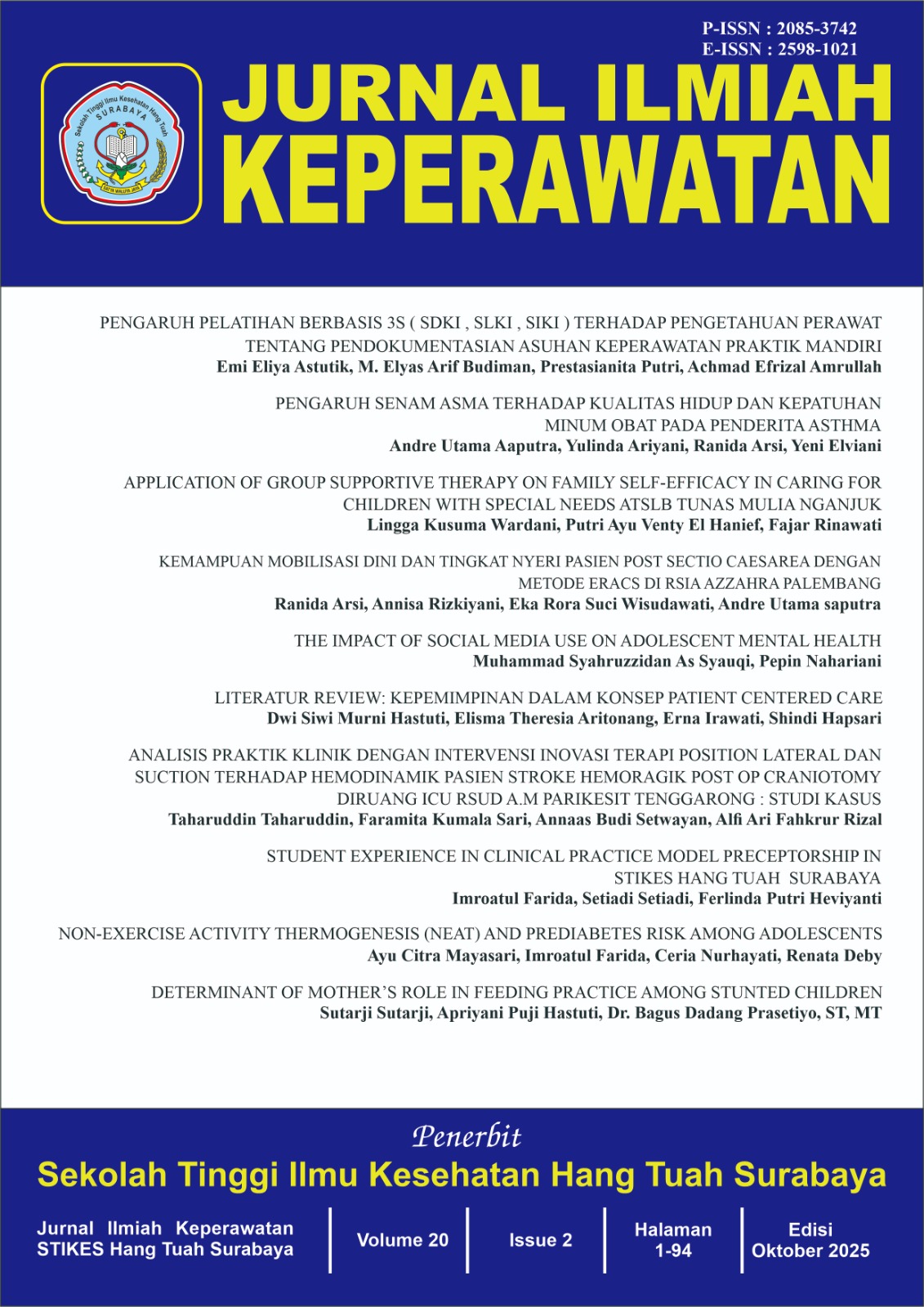
Kemampuan Mobilisasi Dini Dan Tingkat Nyeri Pasien Post Sectio Caesarea Dengan Metode ERACS Di RSIA Azzahra Palembang
DOI:
https://doi.org/10.30643/jiksht.v20i2.420Keywords:
Early Mobilization, Pain, Post Sectio Caesarea, Eracs MethodAbstract
The ERACS method is the latest birthing method resulting from innovation and development of the ERACS (Enhanced Recovery After Caesarea Section) concept. With the ERACS method, patients can mobilize as early as possible and also overcome post-operative pain. Mobilization is a person's ability to move freely and is a prominent factor in accelerating recovery after surgery and anesthesia. While post-operative pain is something that is feared by patients, pain also causes patients to be afraid to move and do activities, especially in the first 24 hours after surgery. The purpose of this study was to determine the ability of early mobilization and pain in post-cesarean section patients with the ERACS method at RSIA Azzahra Palembang in 2024. This study used a descriptive analytical design with a cross-sectional approach. The sample collected was 77 respondents with the accidental sampling technique. The data analysis carried out was Univariate Analysis where out of 77 patients, 74 respondents were able to mobilize early and 3 patients were unable to mobilize early while for pain from 77 respondents, 72 respondents experienced mild pain and 5 respondents experienced moderate pain. From the results of this study, it can be concluded that patients are able to perform early mobilization and are free from post-cesarean section pain using the eracs method at RSIA Azzahra Palembang.
Downloads
References
Andriani, D. (2012). Faktor-faktor yang mempengaruhi tindakan sectio caesarea. Diakses pada 29 Juni 2020.
Aujang R. Complications of Cesarean Operation. Intech Open. 2018
Azhar RA, Bochner B, Catto J, Goh AC, Kelly J, Patel HD, et al. Enhanced recovery after urological surgery: A contemporary systematic review of outcomes, key elements, and research needs. Eur Urol 2016
Aryani, F.N., dan Nurwahyuni, Atik. (2022). Persalinan Sectio Caesarean Metode ERACS Menurunkan Lama Hari Rawat. Jurnal Ilmiah Kesehatan dan Keperawatan
Batmomolin, M., dan Saudah, N. (2022). Asuhan Keperawatan Dengan Masalah Nyeri Pada Pasien Post Op Sectio Caesarea (SC) di RSUD Raden Achmad Basoeni Mojokerto.
Bollag L, Lim G, Sultan P, Habib AS, Landau R, Zakowski M, et al. Society for obstetric anesthesia and perinatology: Consensus statement and recommendations for enhanced recovery after cesarean. Anesth Analg. 2021
Fitria eka wayan et al, Faktor yang berhubungan dengan Bromage score pada pasien spinal anestesi di ruang pemulihan, Jurnal Ilmiah keperawatan sai betik, 2019
Hanifah ani, Dewi Rostianingsih, dan Rupdi lumban siantar, Kemampuan mobilisasi dini pada pasien post section caesarea dengan metode eracs, Sekolah tinggi ilmu Kesehatan Medistra Indonesia, Jakarta Timur, 2023
Hartanti S, (2014). Penatalaksanaan Post Op Sectio Caesarea pada ibu. Published thesis for University Of Muhammadiyah Purwokerto
Humaira N., Sidharti, L., dan Yonata A. (2022). ERACS Sebagai Metode Mobilisasi Dini Pada Pasien Sectio Caesarea. Jurnal Kesehatan dan Agromedicine
Kurlinawati, E., & Astutik, P. (2017). Pengaruh Relaksasi Genggam Jari Terhadap Penurunan Nyeri Pada Pasien Post Sectio Caesarea Di Ruang Delima RSUD Kertosono. STRADA Jurnal Ilmiah Kesehatan, Vol. 6 No. 2 Desember 2017. Diakses pada 21 Februari 2020
Lema, Lusia Karolinda. (2019). Hubungan Tingkat Pengetahuan Mobilisasi Dini Dengan Perilaku Mobilisasi Dini Postpartum Sectio Caesarea (SC) Di Ruangan Sasando Dan Flamboyan RSUD Prof Dr. W.Z Johannes Kupang. CHMK Midwifery Scientific Journal
Mampuk, dkk. (2017). Pengaruh teknik relaksasi nafas dalam terhadap penurunan intensitas nyeri post operasi section caesarea di Ruang Maria RS Pancaran Kasih GMIM Kota Manado. Journal Of Community & Emergency, Volume 5 Nomor 1 Mei 2017. Diakses pada 15 Mei 2020
Mustikarani, Y.A., Purnani, W.T., dan Mualimah, M. (2019). Pengaruh Mobilisasi Dini Terhadap Penyembuhan Luka Post Sectio Caesarea Pada Ibu Post Sectio Caesarea Di RS Aura Syifa Kabupaten Kediri. Jurnal Kesehatan
Nilasari dewita, Enhanced recovery after caesarean surgery (Eracs) : Analisis berbasis bukti, kota Tangerang,tahun 2022
Prof.Dr.Sugiyono, Metode penelitian Kuantitatif, Kualitatif dan R&D, Kota Bandung tahun 2013
Ratnasari Febi dan warmiyati, Pengaruh Sectio Caesarea Metode Eracs Terhadap Percepatan Mobilisasi pada Ibu Bersalin, Jakarta Barat,2022
Subekti SW. Indikasi Persalinan Seksio Sesarea. Jurnal Biometrika dan Kependudukan. 2018.
Subandi, Endang. (2017). Pengaruh Mobilisasi Dini Terhadap Tingkat Nyeri Pada Pasien Post Operasi Sectio Caesarea di Ruang Melati RSUD Gunung Jati Kota Cirebon. Jurnal Ilmiah Indonesia
Tika trias, Lianna, et al, Metode ERACS Sebagai Program Perioperatif Pasien Operasi Caesarea, Lampung, penerbit : Fakultas kedokteran lampung, 2022
Warmiyati, Ratnasari F. Pengaruh Sectio Caesarea Metode Eracs Terhadap Percepatan Mobilisasi pada Ibu Bersalin di RS Hermina Daan Mogot Tahun 2022. Cerdika: Jurnal Ilmiah Indonesia. 2022
Watianggoro, Nanik Sudiharjani, Mobilisasi dini dan penyembuhan luka operasi ibu post sectio caesarea, FK Undip Salatiga, 2020
World Health Organization. Protecting, promoting and supporting breastfeeding in facilities providing maternity and newborn services. Diunduh 17 Juli 2021.
Zambouri A. Preoperative evaluation and preparation for anesthesia and surgery. Hippokratia. 2007.
Downloads
Published
Issue
Section
License
Copyright (c) 2025 Ranida Arsi, Annisa Rizkiyani, Eka Rora Suci Wisudawati, Andre Utama saputra

This work is licensed under a Creative Commons Attribution-ShareAlike 4.0 International License.
Authors retain copyright and grant the journal right of first publication with the work simultaneously licensed under a Creative Commons Attribution-ShareAlike 4.0 License that allows others to share the work with an acknowledgment of the work's authorship and initial publication in this journal.