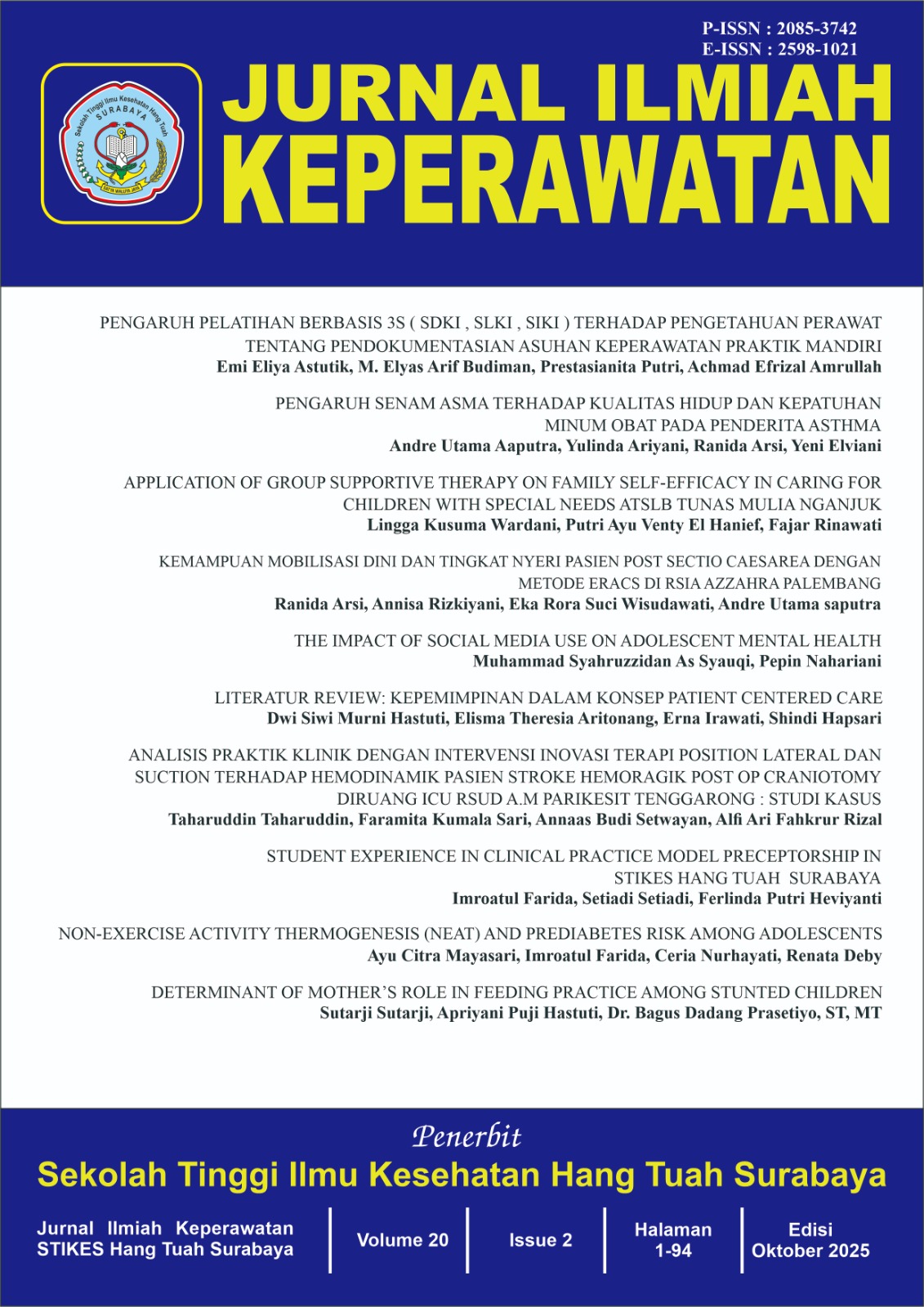
Non-Exercise Activity Thermogenesis (NEAT) and Prediabetes Risk Among Adolescents
DOI:
https://doi.org/10.30643/jiksht.v20i2.441Keywords:
Prediabetes, Adolescents, Non-Exercise Activity Thermpgenesis, NEATAbstract
Introduction: Prediabetes is a metabolic condition characterized by elevated blood glucose levels that do not yet meet the criteria for type 2 diabetes. Non-Exercise Activity Thermogenesis (NEAT), which includes daily physical activities outside structured exercise, plays a crucial role in energy expenditure and glucose metabolism. Adolescents are particularly vulnerable to sedentary lifestyles, which may increase the risk of prediabetes. Objective: This study aimed to examine the relationship between NEAT and prediabetes among adolescents at SMAN 1 Menganti, Gresik. Methods: A correlational analytic study with a cross-sectional design was conducted involving (n =101) students aged 15–18 years. NEAT was assessed using the Mifflin-St Jeor equation and daily activity questionnaires, while prediabetes status was determined via fasting blood glucose measurements. Data were analyzed using Spearman’s Rank Correlation, with a significance level of p < 0.05. Results: The results revealed a significant negative correlation between NEAT levels and prediabetes status r = 0.751, p = 0.009. Adolescents with lower NEAT levels had higher fasting blood glucose levels, indicating a greater risk of prediabetes.Conclusion: Enhancing NEAT through daily physical activities outside structured exercise may serve as an effective preventive strategy to reduce prediabetes risk among adolescents. School-based interventions promoting movement throughout the day are recommended to improve long-term metabolic health.
Downloads
References
American Diabetes Association. (2023). Standards of medical care in diabetes—2023. Diabetes Care, 46(1), S1–S290.
Hamilton, M. T., Healy, G. N., Dunstan, D. W., Zderic, T. W., & Owen, N. (2018). Too little exercise and too much sitting: Inactivity physiology and the need for new recommendations on sedentary behavior. Current Cardiovascular Risk Reports, 12(4), 1–11.
Levine, J. A. (2020). Non-exercise activity thermogenesis (NEAT): Environment and biology. American Journal of Physiology-Endocrinology and Metabolism, 319(2), E430–E436.
Patel, M., Rana, A., & Shah, P. (2021). Physical activity, sedentary lifestyle, and glucose regulation in adolescents. Journal of Adolescent Health Research, 5(3), 120–128.
Rahmayanti, F., Sari, D., & Putri, A. (2022). Association between physical inactivity and prediabetes risk among adolescents. Indonesian Journal of Health Sciences, 12(2), 87–94.
Smith, C. J., & Johnson, L. (2020). Physical activity and insulin sensitivity in youth: A critical review. Pediatric Exercise Science, 32(3), 120–132.
Downloads
Published
Issue
Section
License
Copyright (c) 2025 Ayu Citra Mayasari, Imroatul Farida, Ceria Nurhayati, Renata Deby

This work is licensed under a Creative Commons Attribution-ShareAlike 4.0 International License.
Authors retain copyright and grant the journal right of first publication with the work simultaneously licensed under a Creative Commons Attribution-ShareAlike 4.0 License that allows others to share the work with an acknowledgment of the work's authorship and initial publication in this journal.